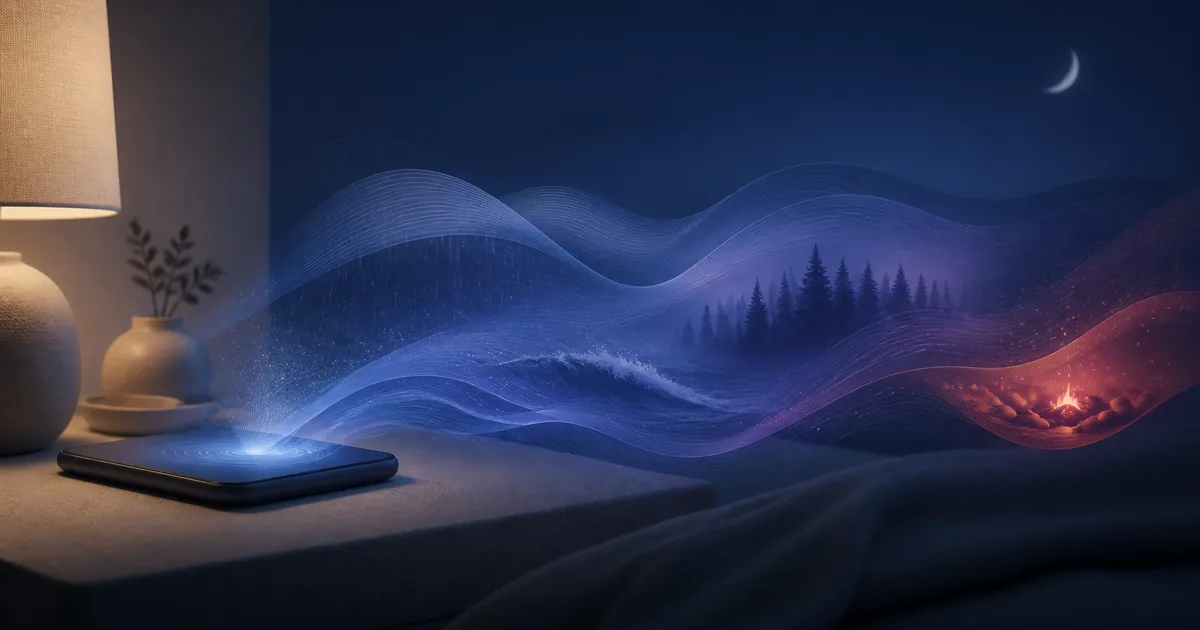
If you want one bedtime routine that fades out before morning, Alarm Pro can pair timed sleep sounds with an alarm routine. A steady background sound may be worth trying when small noises keep pulling you back to alertness: white noise and other sleep sounds may mask sudden changes in the room and give your attention something predictable to settle around. They are not a cure for chronic insomnia, nightmare disorder, trauma, or sleep apnea, and they do not work for everyone.
This guide explains what the evidence actually says, how to try a sleep sound conservatively, when recurring nightmares need a different kind of support, and how Alarm Pro turns the routine into a timed iPhone sleep sound.
The short answer: can white noise help you sleep?
Possibly. The most plausible benefit is sound masking: a consistent, low background sound can make a door closing, passing traffic, or a neighbour’s movement less noticeable by reducing the contrast between the room and a sudden noise. That can be useful when your main problem is an unpredictable sleep environment.
But “white noise” is used loosely in everyday sleep products. Rain, ocean waves, a fan, and a campfire recording are not all strict acoustic white noise. They are continuous or gently changing environmental sounds that some people find easier to ignore than silence.
The strength of the effect varies by person, room, volume, and sound profile. Think of it as an environmental aid you can test, not a diagnosis or treatment.
Why falling asleep and nightmares can become a loop
The American Academy of Sleep Medicine describes persistent, troublesome insomnia in roughly 10%–15% of adults and identifies cognitive behavioral therapy for insomnia (CBT-I) as a first-line behavioral treatment. AASM’s sleep medicine toolkit also notes that sleep hygiene alone is not enough for everyone with insomnia.
Nightmares can add another layer: you may delay bedtime because you expect a bad dream, wake up distressed, and then become more watchful the next night. A 2024 systematic review of 67 articles found that most results supported positive relationships between insomnia-related variables and nightmare-related variables. The authors describe the two problems as potentially mutually aggravating, not as a simple one-way cause. Read the review in Sleep Medicine Reviews via PubMed.
That distinction matters. A sleep sound may make the room feel less unpredictable, but it cannot address medication effects, trauma-related nightmares, anxiety, breathing problems, or another underlying condition.
What research says about white noise for sleep
The evidence is promising in places, but it is not settled.
A systematic review of 38 studies found large differences in sound characteristics, sleep measurements, control conditions, and adherence. The results ranged from improved sleep to disrupted sleep, and the GRADE certainty for continuous noise improving sleep was very low. The review specifically cautions that continuous noise may also affect sleep or hearing negatively. See “Noise as a sleep aid” on PubMed.
One small randomized crossover study illustrates why headlines can be misleading. It included 18 healthy adults in a short-term insomnia model where bedtime was moved 90 minutes earlier than usual. Broadband sound reduced the median time to stage-2 sleep by 38% compared with normal environmental noise. That is an interesting signal, but the sample was small, the participants were healthy, and the experiment does not prove that a white-noise app treats chronic insomnia or recurring nightmares. Read the study on PubMed.
A 2025 systematic review and meta-analysis pooled 12 randomized trials with 1,301 participants, including 356 infants and young children, 648 adults, and 297 older adults. Its reported adult subgroup showed an average improvement in Pittsburgh Sleep Quality Index scores, but the included settings and interventions were heterogeneous, including clinical and intensive-care contexts. The findings are encouraging for some groups, not a universal prescription for playing noise all night. Review the subgroup results on PubMed.
A conservative way to try a sleep sound
Use a short experiment instead of assuming that louder or longer is better:
- Remove avoidable noise and light first. A sound machine cannot compensate for a bright screen, an uncomfortable room, or a predictable source of disturbance.
- Pick a sound that feels neutral. If rain, waves, birds, or fire keeps your attention, it is the wrong sound for that night.
- Start at the lowest comfortable volume. The goal is not to overpower the room.
- Try a 15- or 30-minute timer and notice whether you still need the sound once you are drowsy. The timer is a conservative product-use choice, not a medical safety threshold.
- Keep a simple note for several nights: approximate time to sleep, awakenings, dream distress, and how alert you feel the next day. Stop if the sound irritates you or makes sleep lighter.
The WHO community-noise guidance recommends keeping continuous night noise below 30 dB(A) inside bedrooms when avoiding adverse sleep effects. That is an environmental guideline, not a personal headphone setting or a target for a sleep app. For personal audio, WHO safe-listening guidance uses a reference of 80 dB for up to 40 hours per week for adults, and Apple’s Headphone Safety guidance explains how iPhone exposure notifications and “Reduce Loud Audio” work. Use the lowest effective volume, keep smoke and carbon-monoxide alarms and other critical sounds audible, and stop for ear pain, muffled hearing, persistent ringing, or other discomfort.
When white noise is not enough for nightmares
Occasional bad dreams are common, but recurring nightmares deserve attention when they repeatedly interrupt sleep or daytime life. MedlinePlus advises contacting a healthcare professional when nightmares occur more than once a week or keep you from getting adequate rest or daily functioning over time. It also lists stress, new medicines, alcohol changes, post-traumatic stress, sleep apnea, anxiety, and depression among possible contributors. Review the MedlinePlus nightmare guidance.
If a nightmare follows a traumatic event, or if you have loud snoring, gasping, severe daytime sleepiness, or persistent anxiety, use a clinician or mental-health professional as the next step. The American Academy of Sleep Medicine’s nightmare disorder guide describes imagery rehearsal therapy as a recommended behavioral option for nightmare disorder. Do not stop a prescribed medicine on your own because a dream changed after starting it.
Alarm Pro’s built-in sleep sounds for iPhone
Alarm Pro treats sleep audio as a small part of a bedtime routine, with controls that are easy to set before you put the phone down. The built-in sound carousel includes four nature-based options:
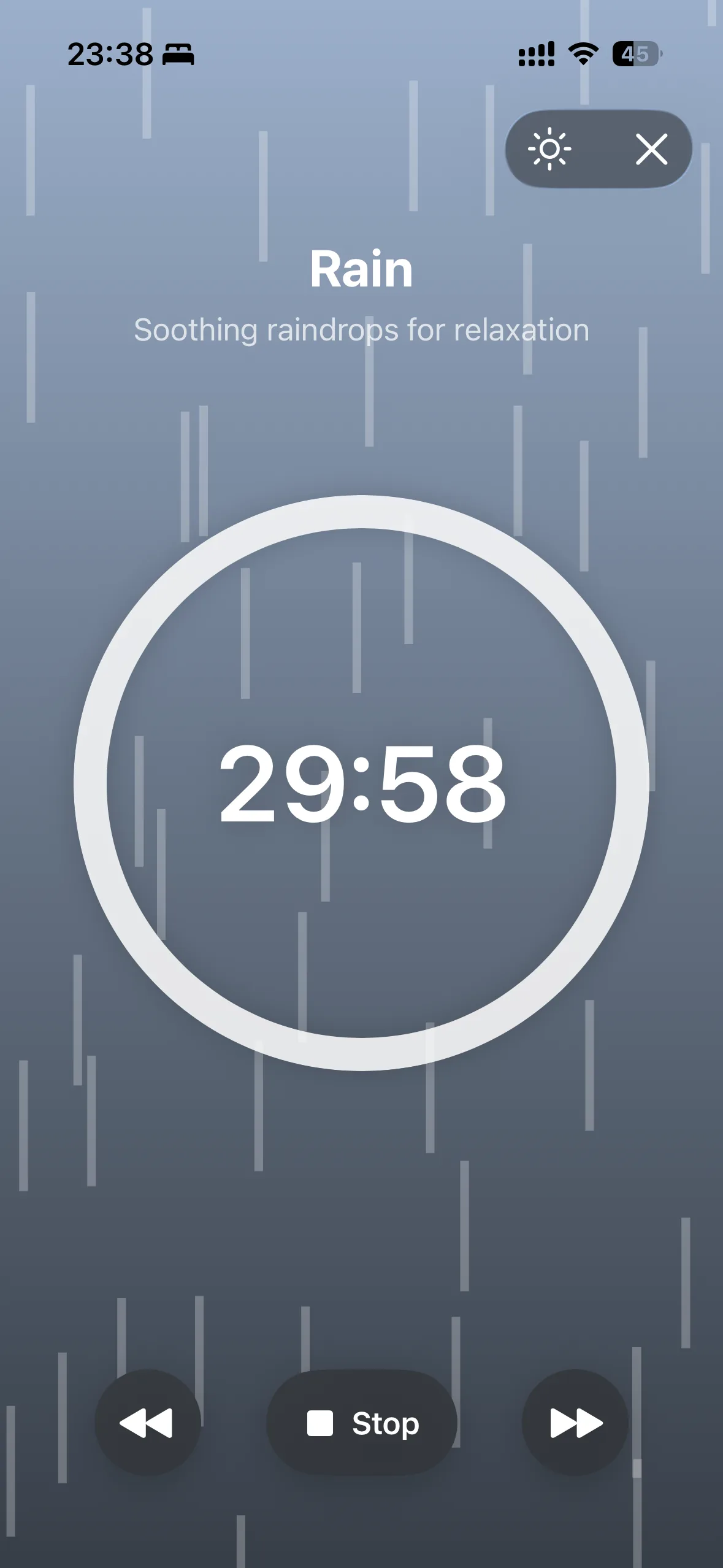
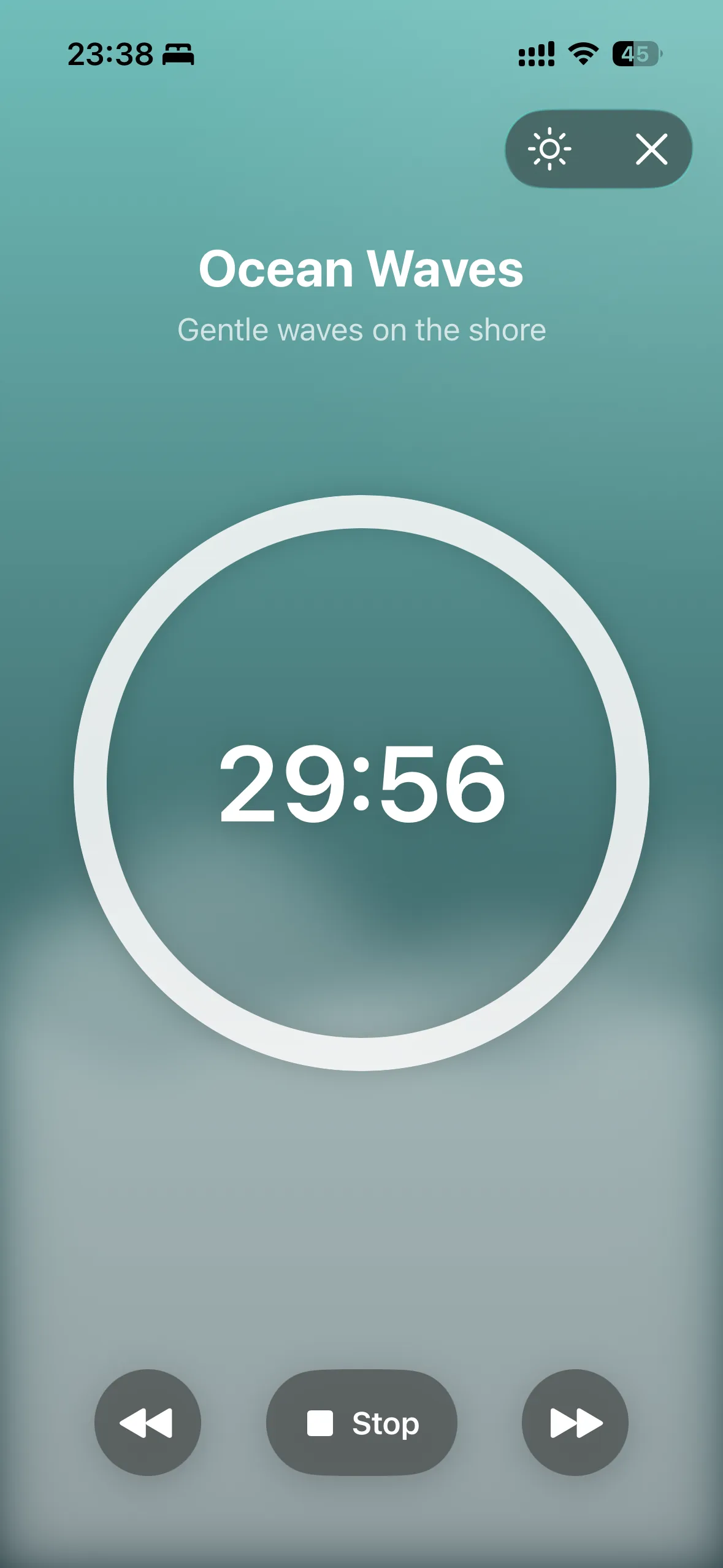
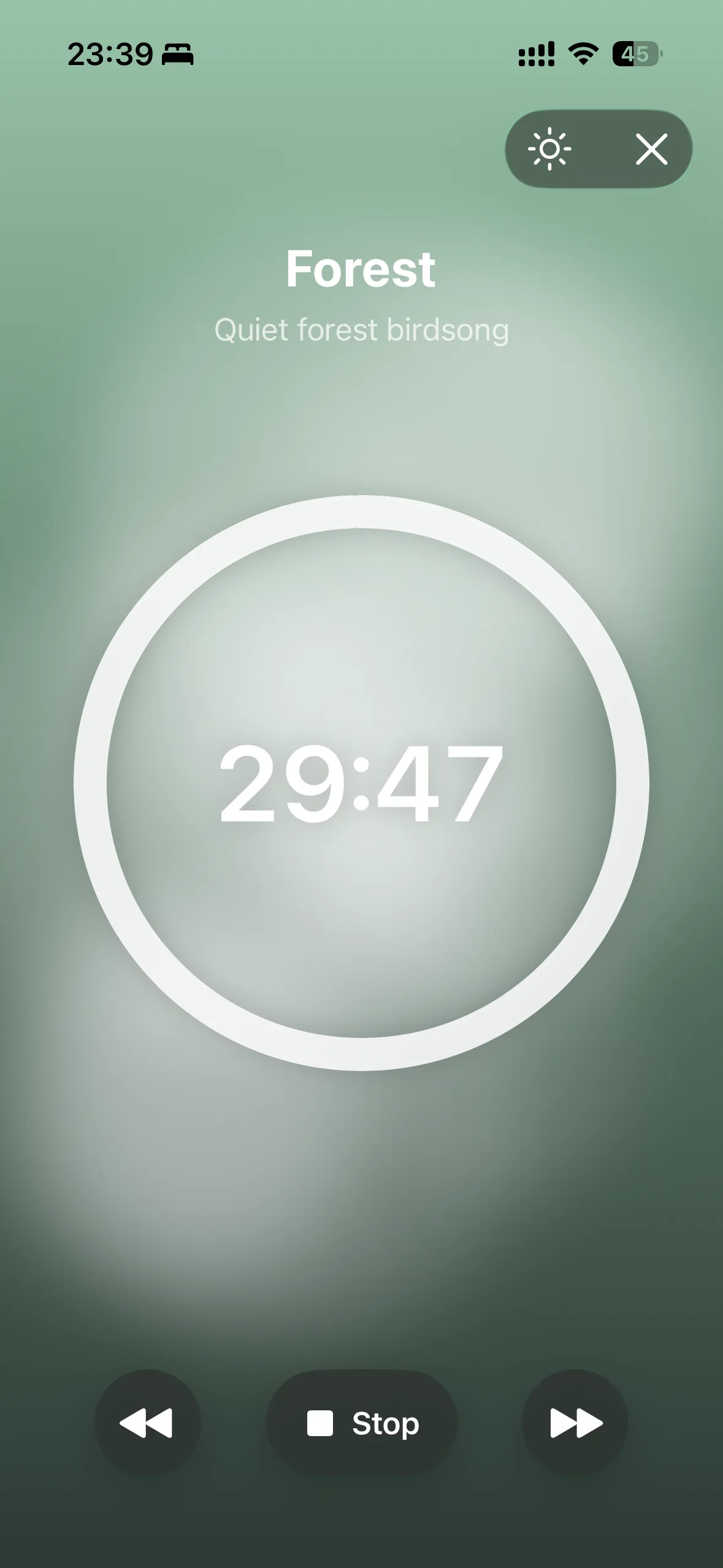
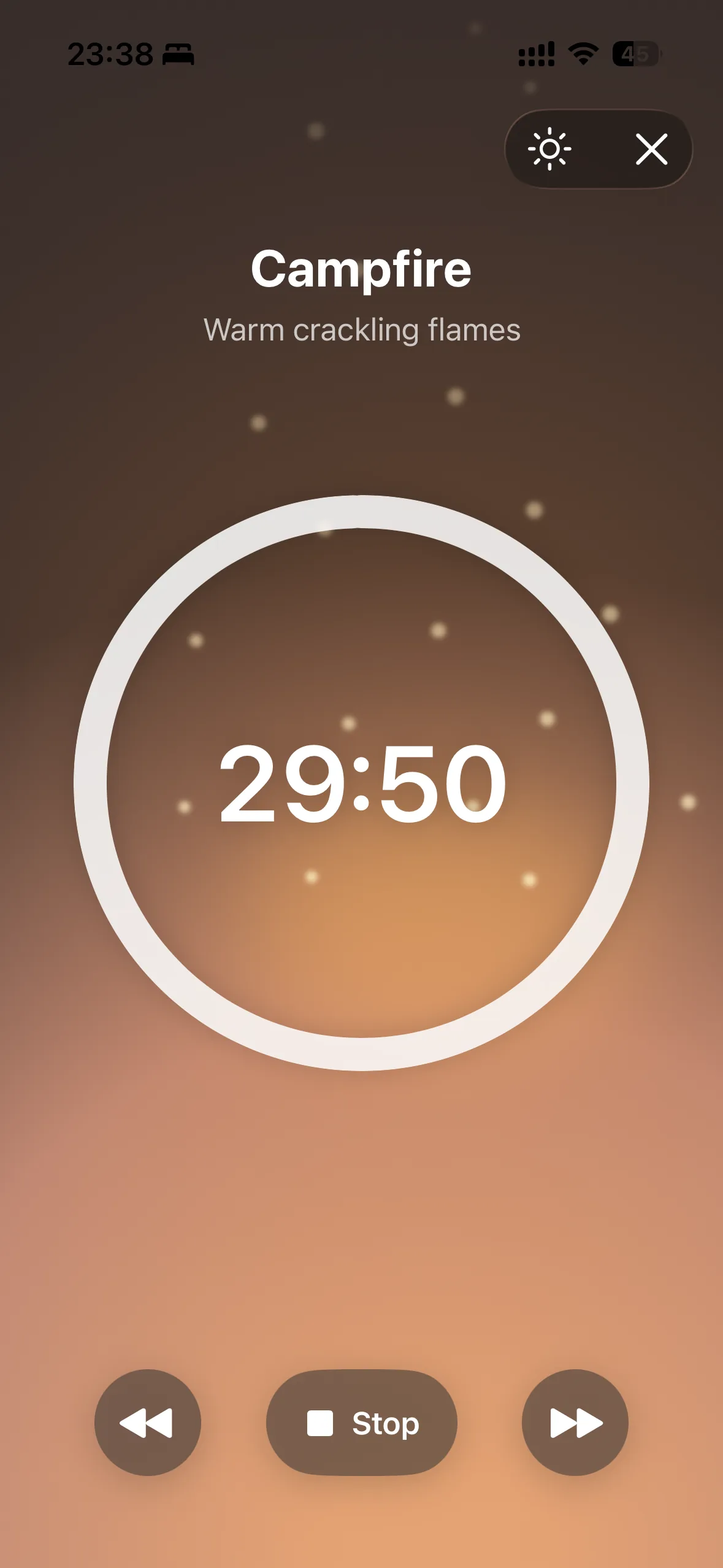
You can choose 15, 30, 45, 60, or 90 minutes. When the countdown expires, playback stops automatically, so you do not have to wake up and reach for the phone just to turn it off. The four options are best described as built-in nature sleep sounds; the product groups them under its white-noise feature, but rain, waves, forest ambience, and fire are not identical to strict acoustic white noise.
If you prefer music to ambience, Alarm Pro can use Apple Music to create a personal sleep playlist. After you grant Apple Music access, choose the tracks you like and save them as a playlist in the app. Availability depends on system authorization, Apple Music availability, and subscription status; Alarm Pro does not replace the Apple Music service.
For people whose main challenge is a changing work schedule as well as falling asleep, you can also review our shift schedule alarm guide and iOS alarm app comparison.
White noise for sleep: frequently asked questions
Does white noise reduce nightmares?
There is not good evidence that white noise directly reduces nightmare frequency. It may make a bedroom feel steadier for someone who is sensitive to sudden sounds, but recurring nightmares can have psychological, medication-related, or sleep-disorder causes that need separate assessment.
Should white noise play all night?
Not necessarily. A short timer is a reasonable way to test whether the sound helps you fall asleep without assuming continuous noise is beneficial. If you keep it on longer, use the lowest comfortable level and ensure essential alarms remain audible.
Are rain and ocean sounds technically white noise?
Not in the strict acoustic sense. “White noise” is often used as an umbrella term for steady sleep sounds. Rain and ocean waves have changing frequency patterns, while a fan or broadband signal may be closer to what researchers mean by masking noise.
Which sound is best for sleep?
There is no universal winner. The best sound is the one you can stop noticing, at the lowest volume that masks the specific disturbance you are trying to soften. Test one sound for several nights rather than changing it every few minutes.
When should I discuss sleep problems with a professional?
Seek help when insomnia or nightmares persist, impair daytime function, occur after a traumatic event or medication change, or come with snoring, gasping, severe sleepiness, or mood symptoms. CBT-I is a first-line treatment for chronic insomnia; a sleep sound can be an adjunct, not a replacement.
White noise is a modest experiment: keep the volume gentle, set a timer, and pay attention to how you feel the next day. If you want those controls in one iPhone bedtime routine, download Alarm Pro on the App Store.